Stephanie Rodgers is a campaigner, communicator, and commentator on New Zealand politics.
She provides advice on messaging and communications strategy, media and social media, organisational culture and crisis management for progressive and community organisations.
A year ago today, I woke up a mother. If I’d been a bit more organised about writing this post, I would’ve published it yesterday and phrased it, “A year ago today, baby was born.”
But things are obviously a bit unpredictable and complicated with a one-year-old.
A hell of a lot has changed in that first year, and that’s not counting all the extra stuff we had on top of having a baby – her heart surgery, moving house, changing jobs, surviving a pandemic. Our little red potato with the black eyes has grown into a loud, happy girl on the cusp of walking and desperate to talk, a proper small person in her own right, definitely the boss of the household.
I’m sure there’s a lot of profound things I could say about feeling more and more comfortable identifying as a mother (a label I often thought I’d never be able to take, and one which has Many Connotations in general conversation), about constant change being the new normal (she’ll always be getting older and bigger and doing new things), about how COVID has made it a necessity to be flexible (we saw her grandmother the day before, and are seeing her great-grandmother in two weeks, and it all counts as her birthday as far as we’re concerned).
But I am very very tired. Of course I am. I have a one-year-old. And there’s always more to do – like get her 12-month immunisations because vaccination is really, really important, people.
So I’ll get to those things in time. For now, mama (and a rather over-stimulated baby) needs a rest.
I had a COVID test this week – after being notified via the tracing app that I was a close contact last week. I’ve been self-isolating, monitoring for symptoms, and trying very hard not to freak the heck out about the worst-case scenario. I’m double-vaccinated, I wear KN95 masks whenever I go out (baby pink with ear loops which my mother bought me because I am that millennial), I scan in everywhere and obviously the Bluetooth is working. I even got my booster shot the very day I was notified about the close contact.
So the odds were pretty strongly in my favour. Not that that did anything to reduce the anxiety, especially when it comes to having a small baby with a history of pulmonary issues due to her heart condition!
The queue at the testing centre in Porirua was long. It opened at 9am; I arrived at 8:20 and the line of cars was already around the block; I was out with a sore sinus and very watery eyes at noon. That’s a heck of a long time to be sitting in the car with nowhere to go, and I definitely felt the glute cramp when I got home. But I had water, snacks, a full phone battery, podcasts and knitting.
(And between starting this draft and posting the finished product, I got a negative test result! Yay!)
More importantly, I had someone at home who was watching the baby.
There were a lot of people with kids in their cars, waiting in that queue. Some probably had to get their kids tested, which is a whole other nightmare I never want to have to face. But I’m sure many more just didn’t have a choice. There wasn’t any other option – no one to watch the kids, no one who could take sick leave, stay home from their paid job, spare a completely uncertain amount of time while the driver went and sat in that queue. Nobody available at short notice, or nobody who could take the risk of looking after kids who might themselves be household contacts of a soon-to-be-diagnosed COVID case.
It seems like the smallest amount of support imaginable – just having another adult around, parent, grandparent, uncle or aunt or older sibling or neighbour, to watch the kids for a couple of hours – and yet a lot of parents don’t even have that. Don’t have the financial means or flexibility to manage sudden upheavals in the usual routine. And the consequence of that is spending three-plus hours with that kid in the car, getting increasingly and very understandably hungry, tired and cranky.
The pandemic has really laid bare a lot of problems in our communities. Things that weren’t quite at breaking point but snapped once they encountered all the pressure of anxiety, illness, insufficient infrastructure and inadequate support systems at once. For the rest of us it can highlight the small privileges we don’t even think about on a daily basis.
I was very grumpy and tired and sore when I got home from my COVID test. But there was a whole huge chunk of care and anxiety that I didn’t have to deal with. The question is, how do we make sure no one has to?
It’s been a month since my last post, which was definitely not planned, but also probably inevitable. There’s only so many hours in the day, and there seem to be even fewer when you’ve got a little one getting increasingly mobile and able to insist on imposing her will on her poor, hapless parents.
It feels like every year since 2016 (you remember. Him.) we’ve all been telling ourselves things can’t possibly get weirder, or scarier. And that was before the pandemic. And now in New Zealand we’re starting to see Omicron variant cases on the rise (and rise and rise), and there are some very scary people camped out on the front lawn of our Parliament threatening to try and execute (because the trials they have in mind aren’t exactly fair) politicians, journalists, and healthcare workers over the vaccine mandates which have been keeping a lot of us safe.
I can’t remember the last time climate change was the major story of the day. That’s just another ever-present cloud hovering slightly out of sight, swinging back into view every now and then to check you haven’t started to feel hopeful about anything.
In the midst of all that it feels bizarre to be a parent. To have a beautiful, strong little person growing up before my eyes. Someone with literally her entire life ahead of her. A life which I hope – which I just assume – is going to involve a lot of pretty normal things: going to school, learning to swim and ride a bike and knit a wobbly scarf. Even though we live in disastrous times. What else can you hope for? If the future were truly completely hopeless, why would you have a child at all?
I could say that having a baby has opened my eyes and expanded my thinking and really made me care about the kind of world she gets to live in. It didn’t, really. I already cared about these things a hell of a lot, and the inaction of decision-makers on issues like climate, poverty and violence already made me really angry. Besides, I also hated it when people pulled that “well, as a parent of course I understand …” line before I had a child, and I don’t want to become one of them now.
It is different. Now, instead of wanting to somehow save the world for all kids, I have a very specific one in mind. What might have been an abstract idea has become much more concrete. When I see things like our Parliament passing a ban on conversion practices, I’m not just thinking of random queer kids being tortured for who they are, often by their own parents, I’m thinking about my baby, and how unimaginable it is that I could ever reject her for being different, for being herself, for loving who she wants to love.
But it’s not like having a baby made me realise that children are precious and important (or, and this bit is specifically for the men, I didn’t need to have a daughter to realise women are human beings, you get it?). I knew. Now, though, there’s a face on all those issues.
And I feel guilty for it. Guilty and responsible, in that classic progressive activist way of wanting the world to be better but being unable to fix it with a snap of your fingers but also feeling like you should be able to. Why didn’t I end patriarchy, erase every relic of our colonial past and save the planet before I had children? What was I thinking, bringing her into this chaotic nightmare which only seems to be getting worse every second?
Well, for a start because that’s a bit of an unrealistic bar to meet. On a more pragmatic basis, people will tell you that there’s no perfect time to have kids: not financially, career-wise, emotionally, psychologically. There’s different advantages and challenges no matter when you do it. That applies to the big picture political stuff too. You can’t wait for the world to be perfect to have kids. If you want them – and god knows I wanted it so badly it was ruining my brain – you make it work, and you fight every day in whatever way you can to make the world the place they deserve. And when she grows up, she’ll fight too.
Baby is nine months old, and I have no idea how much she weighs. It’s not a big deal – she’s very clearly happy, healthy, eating us out of house and home, and we have a Plunket appointment next month for her 9-12 month checkup. But it’s been nagging at me a little, and making me reflect on how it feels like the supports that have surrounded us since before she was born are on a real decline.
And that’s not really a big deal either because we’re still surrounded by friends and family and community. We’re in a really privileged position, being able to have one parent at home full-time (and to have me work from home a few days a week). My mum lives only a half-hour away, J’s family visit regularly.
But before she was born, there was our amazing midwife. Always there, literally at any time of the day or night if we needed her. One person who knew us intimately and had a huge amount of experience and knowledge to calm any anxieties we had (and there are so, so many anxieties). Our antenatal classes connected us to a bunch of people expecting babies at literally the same time as ours, and more experts on things like feeding and sleeping.
Once she was born, there were the hospital midwives and surgeons and Plunket, and once they found her heart condition, the entire NICU team swept in, with nurses and more doctors and social workers. We got enrolled in Heart Kids and put in touch with Parent to Parent. We were back at the hospital for a weight check every week for the first two months of her life.
At the same time, the antenatal group kept going, with group chats and coffee catch ups. It meant so much, sitting in the dark at 2am feeding a jaundiced little bub, to be able to type “god I’m so tired, anyone else up?” and have three other mums respond.
It’s a bit redundant to say things change over time. Of course, once baby had her surgery and recovered like a complete champ, we weren’t going to need all those checkups. Of course, Plunket doesn’t have to be dropping in quite so often once you’ve nailed those early milestones. And naturally, as paid parental leave starts to finish up, people go back to work and schedules become more complicated and those weekly coffee catch ups become harder to coordinate.
I’d never go back to those early weeks when everything was new and completely terrifying and we desperately needed to have all those people on the end of the phone to reassure us and get us additional support. But I do miss the security net, and the sense of a whole community focused on one thing: a happy healthy baby. It feels like you lose that support in little bits and pieces, and sometimes – like when you look at baby’s WellChild book and realise you don’t know how much she weighs – it hits you all at once.
The past couple of years have been incredibly difficult on everyone, everywhere. Let’s hope 2022 is better!
It’s always easy to feel like you’re not doing enough, and weirdly, it feels even easier to criticise yourself when things are going badly around you. We’re all meant to be writing the next King Lear or renovating our houses and teaching our babies Latin while we’re in lockdown, because obviously a pandemic just means we all have more time on our hands, right? Then there’s the immense pressure at this time of year to be setting resolutions – usually pretty toxic ones about “fixing” the things that are wrong with our bodies and lifestyles, which are doomed to failure and thus make us feel even worse because we’re taught to compare ourselves to wealthy celebrities who have all the time and resources in the world to “eat right” and go to the gym every day and get constant cosmetic procedures to keep looking 35 until they hit 70.
Sometimes, surviving is enough. In a time of global pandemic, surviving is definitely enough. And finding just one or two achievable things to make us feel like we’re making a bit of progress is more than enough. But I don’t make them resolutions – that’s setting up metrics for whether I’m a success or a failure as a human being or as a mama. And one thing I really want to do this year is not think of myself as a failure. At least, not too often, and not without having some strategies to get my brain out of that black hole.
That feels optimistic (and ambitious) enough to me!
Last week, baby had a fall from the sofa, onto the carpet, onto her head. There had been a couple before – onto her butt, which is very well padded – and the sofa isn’t high, but this was terrifying. She paused for a moment, she cried loudly, she was comforted quickly. So far, so good (except for the fall). Just one of those moments you freak out about at the time but really, just something that happens to every baby, right?
Except you do have to take every blow to the head seriously. Even if every bit of literature says it’s probably nothing serious, they all conclude but get it checked anyway. That’s nice and straightforward. So I called Plunketline and waited, and waited, and was presented with my first dilemma: did I keep waiting, or hit the number 3, which was tantalisingly presented as offering a quicker response from a Healthline nurse who could do triage. I mean, the baby’s condition wasn’t “hang up immediately and dial 111” serious, obviously, but was she “take up a triage nurse’s valuable time” serious? Or only “wait your turn” serious?
I pressed the number 3 and felt terrible about it. The lovely nurse – I have only ever had positive experiences of Healthline and the Plunket line, even though almost every call has been more about my own anxiety than a genuine medical issue, and I think they understand and empathise with that – went through the checklist. No vomiting, no unconsciousness, no floppiness, acting like her normal self. Probably fine, just like I thought, just like the literature said, but then again, at the end: but get her checked face-to-face by a doctor.
I hung up, and did a huge melodramatic sigh, and thought, “Really???”
It’s a situation that feels like a dilemma because you know that in 95% of cases the doctor will find nothing wrong and you will have, in some sense, “wasted” their time. But the 5% of cases where things are more serious justify every single one of those 95. On the other hand, you have so many cultural narratives about parents – usually, specifically, mothers – being too sensitive, too concerned, too worried, not “letting kids be kids and take a few bumps”. You really, really don’t want to play into that, or worse, have other people think you’re playing into it.
I was determined to do the right thing, with “better safe than sorry” going around and around in my head. But boy, did the baby pick the very best day to test me on this, because there was a massive pile-up on the motorway, the local medical centre had literally no doctors available because the roads were closed, the local community hospital had an estimated 1.5 hour wait and because there was clearly nothing wrong with the baby we were bottom of the queue, and we ended up going all the way back into town to our GP who happened to have a free slot.
So add worrying about being stuck in traffic forever – I had no idea if the gorge was still closed or how long the gridlock would take to disperse – with, now, exposing the baby to multiple places sick people go to the pile of evidence that I am the world’s worst mother. I mean, I obviously let her fall off the sofa in the first place!
The brain can only handle so many things to stress out about simultaneously.
She’s fine. She checked out. But there was one more hurdle to clear: just on the offchance everyone had somehow missed signs of a concussion, we – I – had to wake the baby in the middle of her sleep cycle, in the middle of the night, just to check she would rouse normally.
No parent ever wants to hear the phrase “check she can rouse normally in the middle of her sleep cycle”, am I right?
It felt like a kind of penance, setting an alarm for 2am (and knowing always that I’m already lucky having a baby who sleeps pretty solidly) and shaking her awake, hearing her startled, indignant crying begin, realising she now needs a feed and a change and all my hopes of just gently easing her back to sleep were shattered.
But why the hell did I have to do penance?
Explaining these thought processes feels like trying to teach someone a recipe in a language neither of you speak. It makes no sense. Babies have falls, and helplines are there to take your call, and doctors are there to check them over, and waking them up is a good thing. Nobody did anything wrong in this situation. Yet the starting assumption of my brain was: yes you did, at every conceivable stage of this process. And not just this process; everything. You are at all times and in every way a Wrong Mama.
It’s an exhausting way to live. And it’s dangerous, because when all that anxiety gets on top of you, the instinct is to not ask for help. You feel like you’re being silly or paranoid or overthinking things. You’ll just look like a fool if you go to all that bother for nothing.
And maybe you are, and maybe you will. But you’re allowed to ask for help anyway.
If you’re pregnant/hapū or breastfeeding, one of the best things you can do to keep your baby safe from COVID 19 is get vaccinated. The antibodies your immune system makes get passed to baby through your placenta and breastmilk, and give them protection while they’re too little to be vaccinated themselves.
Babies can get COVID. And it can get really serious. But there’s been a lot of disinformation spread around about the vaccine, and especially how it (DOES NOT) impact pregnancy, miscarriage, and fertility.
On the fertility side of things: here’s an excellent article from the Herald about the vaccine being safe for fertility, IVF and pregnancy. Please share it widely to counter the disinformation.
On the miscarriage side of things, and to get to the point of this post: I am so, incredibly, angry at Dr Simon Thornley.
Thornley, who is somehow still a senior lecturer in Epidemiology and Biostatistics at the University of Auckland, has been a critic of New Zealand’s response to the COVID pandemic and a member of Plan B, the weirdo lobby group who declared (I’m not linking to their website) “New Zealand’s attempt in 2020-21 to eliminate Sars-Cov2 was unnecessary, and would cause more health, social and economic harm than the virus itself.”
If anyone needs me I’ll be over here looking at NZ having some of the strongest economic stats in the world AND not thousands of people dead.
After been proven wrong on every point for a year and a half, Thornley (and others) decided to stage a defence of their position by “reanalysing” a study published by the US CDC on the safety of mRNA vaccines in pregnancy.
Stuff have an excellent piece outlining all the different ways in which this “reanalysis” is complete bunkum. This is the big one:
Many of its promoters focused on one specific aspect. The paper recalculated the reported miscarriage rate to only include people who were pregnant in their first or second trimester when they were vaccinated. Doing so increased the miscarriage rate to between 82 and 91 per cent, a shockingly high figure.
Doing so, however, makes no mathematical sense. Because the study lasted three months, the only way for a person to complete pregnancy in that timeframe is to have a miscarriage (unless they were late in their second trimester).
This is like studying the safety of the vaccine in Formula 1 drivers and coming to the conclusion it’s dangerous because, of the drivers who finished the race after only 20 laps, 91% had a crash.
No shit. The race wasn’t finished yet. There aren’t many other ways to retire in the first 20 laps!
In very weaselly style, the authors of the paper claim they only did this math to prove that the CDC study was insufficient. Except you don’t need to do the math to explain that – you just say “the study was only three months long so we don’t have full data on all the pregnancies recorded.” And Thornley has gone on to say things like “vaccination early in pregnancy “indicates a substantially increased risk from background””. The paper itself recommends withdrawing the vaccine not just from pregnant people, but also children and people of “child bearing age”.
(I have a whole other post or two in me about the sexist smugness of people who want to treat everyone with a uterus between the ages of 16 and 50 as though we’re automatically pregnant at all times. Another day!)
This whole situation made me deeply angry. Miscarriage is an incredibly traumatic experience. When it occurs there’s a huge question hanging in the air: what did I do wrong? There is so much pressure and anxiety on pregnant people to make the right medical choices for themselves and their baby, so much risk and so many unknowns, and as I wrote in my last post, it’s impossible not to hold yourself responsible if something goes wrong.
And Simon Thornley et al, in a desperate, cynical attempt to scrape back a bit of credibility, seem to have deliberately exploited that anxiety by essentially telling all those people who had miscarriages after getting the COVID vaccine: it was your fault. You made the wrong choice. You harmed your baby. And by telling everyone who is pregnant and has had the vaccine: your baby’s going to die and it’s your fault.
That is simply unforgiveable to me.
(It’s been suggested that of course we cannot know for certain if Simon Thornley did all this on purpose. The alternative is that he’s completely incompetent, so it’s still baffling he can hold a senior academic position.)
I thought my rage was subsiding a bit over the past day, and then yesterday afternoon I was driving home listening to Checkpoint’s story on the new community cases in Rotorua. And I heard a young woman say she was going to get the vaccine – after her baby is born. Why? “I’ve just heard too much things, ay.”
“Things” like a senior lecturer in epidemiology insisting that pregnant people (in fact, anyone “of child-bearing age”) shouldn’t be allowed to get the vaccine because it increases the risk of miscarriage, maybe?
This isn’t some high-minded, good-faith academic debate. This is people – scientists – manipulating data to create fear and anxiety and to dissuade people from getting vaccinated. Which, again, is the single best thing you can do to protect your baby in pregnancy or infancy. This kind of disinformation directly contributes to low vaccination rates and they’re using the credibility of their doctorates and institutions to do it.
These unscientific thought experiments are having serious, real-world impacts, affecting pregnant people and their babies and making it even more difficult to persuade hesitant people. I don’t know what to say except how appalling it all is.
Back to my one weird trick of writing up some of the copious notes I took before baby arrived!
So, we won the IVF lottery on our second spin of the wheel (I never know how to count it; is it still our first go if we only had to do the embryo transfer twice, but didn’t need to do all the hormone/egg collection rigmarole again?).
And it was exciting, and terrifying, at the same time. It also didn’t feel quite real – or maybe it’s more accurate to say, I didn’t let it feel real.
As I wrote in that previous post, every bit of good news just kicks off the next cycle of anxiety. A positive pregnancy test is only one step in confirming you’ve got a bona fide healthy pregnancy on board, and the moments of greatest excitement are also the moments of greatest risk.
I think I managed to not cry, not shed a single happy or upset tear, until the seven-week scan.
It’s the big cut-off point for IVF patients. Either everything is looking good, and they happily send you off to go find a midwife and carry on like any normal pregnancy, or, well, it’s not and you have to decide whether to go through it all, all over again.
I hadn’t had any bleeding (good sign?) or cramps (neutral sign?) and maybe just a little low-level nausea in the evening (good sign?), which naturally I turned into another thing to worry about because my mother had horrific morning sickness with me so maybe not puking my guts out was a bad sign??? But I managed to lock everything down into an itty-bitty box and refused to look at it.
Bottling everything up is not typically a great long-term strategy for mental health, but (personal reckons, and I am not a psychiatrist!) I figured in the very short term it was better than having a full-blown meltdown.
And then, there it was. A weird little flicker in the middle of a weird little bean-shape sitting smack in the middle of my uterus, on a big screen for all three of us (me, J and our lovely fertility doctor) to see.
I will happily admit I cried. That little flicker made it real.
(And it also made me angry because of that whole “heartbeat” meme that anti-choice monsters use to deny pregnant people the right to choose, and I didn’t want to feel angry and political in that moment. Though it is on brand. But that’s all a rant for another time.)
Although I had done my best not to get my hopes up, in case they were dashed, I had started talking to the baby. Trying to build a sense of connection to something not even a centimeter big. Hoping in a vague and ridiculous way that it would create a positive environment, a good vibe, some more luck. But it wasn’t as real as it became when I saw her on that screen, thumping away, oblivious to literally everything.
We all react differently. J started planning things. I bought one of those week-by-week antenatal books. This was pretty typical for both of us.
And it was all fine for a couple of days. Then I had a bit of a crash.
This is really where the title of this blog comes from, because the note I wrote on 3 September, four days after the scan, was entitled “Everything you do is probably wrong”. It was my first, proper, massive panic attack of the pregnancy.
If you’re like me, you start off thinking you’ll be sensible about it all. Just follow the normal guidance. Definitely don’t believe everything you read on the internet! Check the advice about food and exercise and sleeping and symptoms to watch out for.
And then, somehow, it all spirals into a freakout because what if the pet guinea pigs have contracted a rare virus from a mouse so now you can’t be in the room while their bedding is being changed and maybe washing your hands for the third time in 10 minutes will help??? on top of the ten other things you Googled today.
I could tell it was bothering J. Suddenly I was stopping meals halfway through to check if I was allowed to eat them. I was transformed from the stroppy feminist who’d happily rant about diet culture and food policing and the way patriarchy constrains pregnant people by creating an environment of fear and blame, into a nervous woman whose favourite phrase was “no, I can’t eat that.”
But it was really difficult to break out of it because it made total sense.
The fact was, at that point, if anything went wrong – if we lost our pregnancy – no one would ever be able to convince me it wasn’t my fault.
When our first embryo didn’t take, it was actually kind of easy to shrug and say, well, fertility science is basically witchcraft, they have no idea why it does or doesn’t work a lot of the time, it’s a coin toss roll of the dice cross your fingers kind of game. And it was even easier than that knowing we had an embryo on standby in the freezer, so we didn’t have to consider re-starting the whole bloody process.
But now – then, after the seven week scan – the baby was there. She had a heartbeat (see previous note about awful anti-abortion losers). And the only person who could screw things up was me. The doctors had done their job. J had performed his part. My body became the weakest link, and I just didn’t have a lot of faith that my body was up to the job.
The trick I always (try to) use with anxiety is: find the thing you can control. For me, it was finding a midwife. At the same time I felt like everything was exploding around me, I was scanning online profiles for a lead maternity carer, hoping I’d find the perfect person who would make it all smooth sailing again. Someone – a third party, not my partner or my mum or my best friends, who are obviously all biased and therefore liars – who could reassure me that every pregnant person goes through this stuff and comes out fine on the other side.
The baby had an unusual 3am wake-up last night – and I know I’m very lucky that that’s unusual for her, but it doesn’t make the shattered sleep patterns any easier to deal with – and ended up lying back in bed, around 4am (after feed and burp and change and pump) with my two favourite people on either side of me making their usual snuffly and/or snorey noises, reflecting on a mantra that got me through those earliest weeks at home when it felt like I’d never sleep again.
It’s enough to just lie here, in the quiet and the dark.
We spent the first week of baby’s life in hospital, and I was absolutely sleep deprived – she was on a three-hourly feeding-and-top-up cycle for jaundice and I was trying to learn to latch her and still knocked flat by the C-section and in a strange room with strange noises and lights and midwives appearing what felt like every five minutes to take my blood pressure. In a way, there was just so much going on that I didn’t notice how tired I was. I’d gone through “tired” and out the other side. But you can’t keep that up for long.
The second week, once we were home and lost the massive omnipresent support network the hospital offers, that was when things, specifically my and J’s brains, started to break.
There is a piece of advice that gets passed around pregnant people: sleep when the baby sleeps (and its corollary, clean the house when the baby cleans the house). It’s a lovely theory, and on the few occasions I’ve managed to do it, it’s incredibly healing. I think that’s why I’ve shared it myself – it does help, when it works.
But the fact is, some chores still need to be done, if you want to have a bottle to feed the baby with (or a mug for your own precious twilight cuppa) or cloths to wipe her butt. Sleep gets pushed down the priority list pretty easily, and when you finally get to it, on a timer that could go off any minute, it feels impossible. As though you’ll never sleep again and the only possible outcome is putting your brain in a robot body.
Like a lot of obligations, it creates a cycle of anxiety. You know you need to sleep in order to function and if you don’t sleep you’ll feel worse so you need to sleep and all the time you’re spending worrying about not sleeping is time you are not spending sleeping which you know you need in order to function … etc etc etc.
On top of that, you’ve just gone through a huge series of changes. Again, you don’t notice so much in hospital because there’s so much else going on. But back home, in your own bed, without the distractions of beeping machines and doors opening and closing in the corridor outside, you try to revert to old patterns. Except those were the patterns you had when you were pregnant. You’re not pregnant any more and you’ve barely had the opportunity to realise that. You don’t need to do those pre-sleep Kegels any more – or at least, not for the same reason. Which might mean – it did for me – having a little cry because you missed out on the birth experience you were hoping for. And then you wonder if your knees were always this hard, before those months spent wedging a pillow between them to alleviate your hip pain. And hang on, which side do you even like to sleep on when there isn’t stabby sciatic pain making that decision for you?
Finally, it’s the wee hours of the morning, it’s dark and you’re alone and all the worst thoughts your brain can conceive of start bubbling to the surface. It becomes very easy to believe that you can’t do this, and there’s no one around to contradict and affirm you. I mean, you can’t even get to sleep in your allotted sleep hour, how can you possibly raise a baby?
And that’s where the mantra comes in.
It’s enough to just lie here, in the quiet and the dark.
It’s not sleep, but it’s still rest. It’s a moment of stillness. It’s not getting any of the “real” things on your list ticked off, but it’s what you need to get them done tomorrow. And when those intrusive awful thoughts came crowding in, for me, it was something concrete and simple to focus all my attention on. Sometimes, that would be enough to get me off to sleep. And if it didn’t – if the baby had a nappy explosion or an offensively loud truck drove past the house or next door were having a party (on a TUESDAY? You MONSTERS) – it was the best thing I could do, in that moment. That was the job, even if it was “just” lying in bed staring at the ceiling.
It didn’t make everything magically perfect and easy, but I am absolutely certain it would’ve been a lot worse if I’d let the anxiety goblins feast on my delicious brains instead.
There were mantras for other times, too. Maybe I’ll write about them next time.
This is one of those swerves I was talking about in my last post. A jump ahead to the present day, where baby is born and bonny and presenting all kinds of fun new challenges on a daily basis.
Due to her arrival, we decided we needed more room. Our first home wasn’t tiny by any means – but we are people who collect lots of stuff, and my partner’s side hustle as a YouTube board game reviewer involved a lot of shelf space and filming equipment. With a tiny person on the way, we needed a whole new room (for her) and a new setup (for the gear, which could be locked away out of reach of tiny hands and mouths).
So we sold our house, and bought a new one, and I won’t bore you with the stressful saga that is trying to buy and sell property as the country leaps into level 4 and 3 lockdowns. Suffice it to say that despite recent changes by the government, it’s still an investors’ game out there, especially if you’re looking at places with sleepouts or separate living areas which can be flipped into additional rentals.
But we got very lucky. One acceptable offer came through on our house, and a perfect candidate cropped up a few weeks (filled with nightmarish dreams of temporary homelessness) later, and we made a (slightly padded) offer, and were accepted.
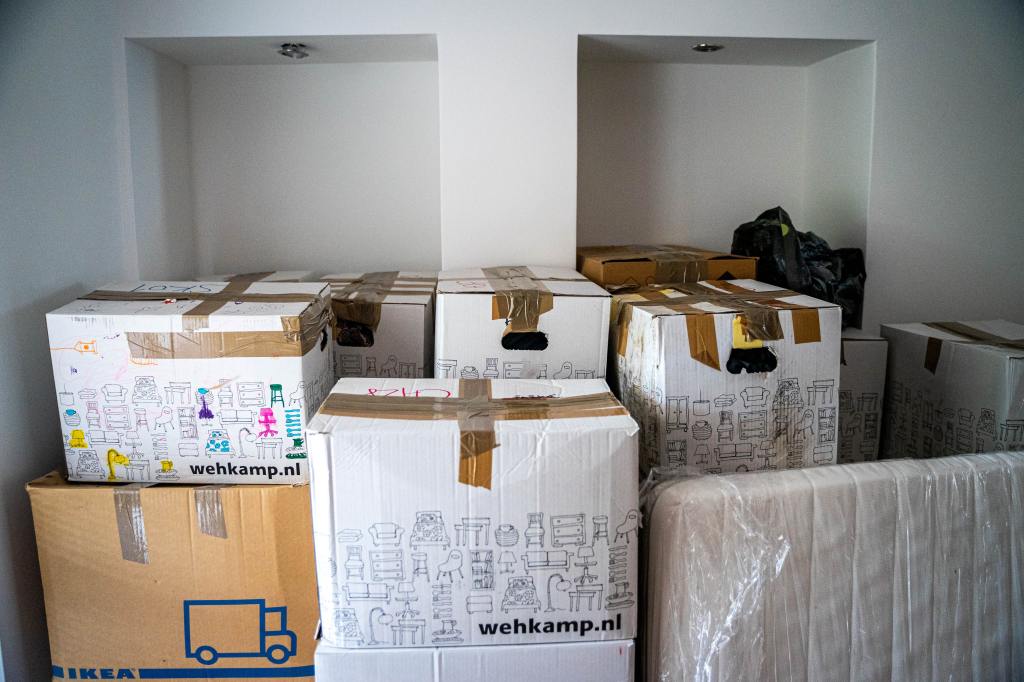
Throughout this process we had a lot of our stuff in boxes – some in a storage unit and the rest packing out our garage, so the house itself could be staged (made to look like no house anyone actually lives in, but people might aspire to) and kept super-duper clean.
That was the first challenge. Babies come with a lot of stuff, and we couldn’t exactly ask her to tighten her belt and only throw up on 50% as many outfits as normal to save us shelf space. There was no wiggle room to let the laundry pile up just a little – everything got done the day it got dirty. And once we got to the point of moving, well – it’s easy enough for adults to say “I’m going to live out of this single suitcase for a week”. For a baby, everything pretty much has to remain available to hand right up until the last minute.
The move itself, that’s where the logistical nightmare kicks in. The movers are going to arrive at a certain time and for a big block of it, you need to be there, amongst increasingly decreasing furniture, in order to advise on any tricky items (our sofa simply would not fit out the door without the legs being screwed off) and lock up after them before driving to the new place for the unpacking.
I ended up breastfeeding baby at one point cross-legged on the floor and I’m just glad she decided to cooperate with that.
The baby simply takes up space, as well. If you’ve got delicate items to move, or ran out of time and threw a lot of things into unclosed boxes or reusable shopping bags (purely hypothetically, asking for a friend) having to ferry the little one in their capsule to and from the new house cuts a whole car seat’s worth of space out of your capacity. By the time you’ve spent eight hours shuttling things back and forth and trying to figure out how it all fits in a new space, you really, really don’t want to have to do just one more trip.
What saved us was whānau. Specifically, my mother. She rocked up early the day of the move, and became primary Baby Wrangler for the day, except for feeding times. She was also able to ferry my partner – a non-driver – to the new house so he could be there to direct the movers bringing everything in.
(She also took it upon herself to thoroughly re-clean the entire kitchen and dismantle the broken cutlery drawer but that’s more of a bonus feature, as was her partner doing some unschedule carpentry work to make sure our fridge would fit in the cabinets.)
The thing is, we have a “good” baby. She’ll amuse herself most of the time, grizzles only when she’s hungry or tired or wet, and for long stints doesn’t necessarily need us to be around (unless her social meter is getting low). She even gives me enough breaks – short and unpredictable as they might be – to write a few blog posts. But when you’re going through a massive process like house moving, a baby, no matter how “good”* they are, is just another potential stress point to divide your attention, on top of a dozen other potential stress points. Having another adult around who can just be The One Looking After Baby, who will let you know when you are needed, was a huge mental relief.
The TLDR: it’s always handy to have an extra pair of hands around to take care of baby, and this is never truer than during a massive process like house moving. It’s not revolutionary, but the past couple of weeks have really made me appreciate how much of a difference it makes.
Oh, and pack the nappy bag as though you were going out for a long trip – so you’re not panicking about where the wipes or the baby balm are after a very tiring day!
~
*I hate the way we talk about “good” babies versus “fussy” or “naughty” babies but it’s a useful shorthand.







 Wrong Mama